Jigging Technique from a Drifting Boat
The Butterfly Jigging System uses tackle designed to attract and detect bites from even the most finicky of fish. It's an action/reaction system designed to allow you to savor the invigorating feel of every movement while retrieving the lure. The feel of the bite is similar to the feeling of electricity flowing through the rod with every movement of the fish exaggerated, due to the sensitivity of the tackle.

The Butterfly Jigging System uses tackle designed to attract and detect bites from even the most finicky of fish. It's an action/reaction system designed to allow you to savor the invigorating feel of every movement while retrieving the lure. The feel of the bite is similar to the feeling of electricity flowing through the rod with every movement of the fish exaggerated, due to the sensitivity of the tackle.
Follow These Steps
1.Cast the Butterfly Jig down the current, wind, or drift direction.
2.Let the jig sink to the bottom.
3.Begin retrieving with jigging technique motion.
4.Retrieve the jig several yards from the bottom.
5.Let the jig sink to the bottom (Repeat steps 4&5 several times with each cast).
6.Once line is even, or under the boat, retrieve the jig and cast down the current or wind to start process over.

Butterfly - Regular/Flat-Side
Jigging Action: The Butterfly technique requires a precise motion to impart the right fish catching action to the jig. This technique works for both conventional and spinning tackle with the same results.
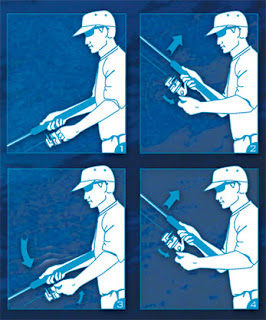
After the jig is dropped to the desired depth, the rod tip is facing down. With an upward circular motion, the rod tip will be lifted up on the upswing on the reel handle and lowered on the downstroke of the rotation. The reel retrieve is a tight circular motion that is close to the body with the rod butt held loosely under your left armpit. The distance in which the rod tip moves from top to bottom is approximately 10 to 20 inches depending on the desired lure action and retrieval speed. This technique will work on a fast or slow retrieve depending on how the fish are reacting.
After the jig is dropped to the desired depth, the rod tip is facing down. With an upward circular motion, the rod tip will be lifted up on the upswing on the reel handle and lowered on the downstroke of the rotation. The reel retrieve is a tight circular motion that is close to the body with the rod butt held loosely under your left armpit. The distance in which the rod tip moves from top to bottom is approximately 10 to 20 inches depending on the desired lure action and retrieval speed. This technique will work on a fast or slow retrieve depending on how the fish are reacting.
Butterfly - Long
Jigging Action: The Butterfly Long Jig is a very productive lure and works well with the standard jigging technique outlined previously, as well as the following Long jig technique explained below.
The Long model jigging technique works with both spinning and conventional tackle. This technique requires the rod butt held loosely under your armpit depending on what type of tackle (spinning or conventional). After the jig reaches its desired depth, the rod tip is facing down. With an upward jerking motion, bring the rod tip up to the 11 o'clock position. Once up there, wind down taking up the slack in the line until it comes tight, which will lower the rod into the starting position then repeat as previously described. You can adjust the speed of retrieve depending on how the fish react.
The Long model jigging technique works with both spinning and conventional tackle. This technique requires the rod butt held loosely under your armpit depending on what type of tackle (spinning or conventional). After the jig reaches its desired depth, the rod tip is facing down. With an upward jerking motion, bring the rod tip up to the 11 o'clock position. Once up there, wind down taking up the slack in the line until it comes tight, which will lower the rod into the starting position then repeat as previously described. You can adjust the speed of retrieve depending on how the fish react.
